
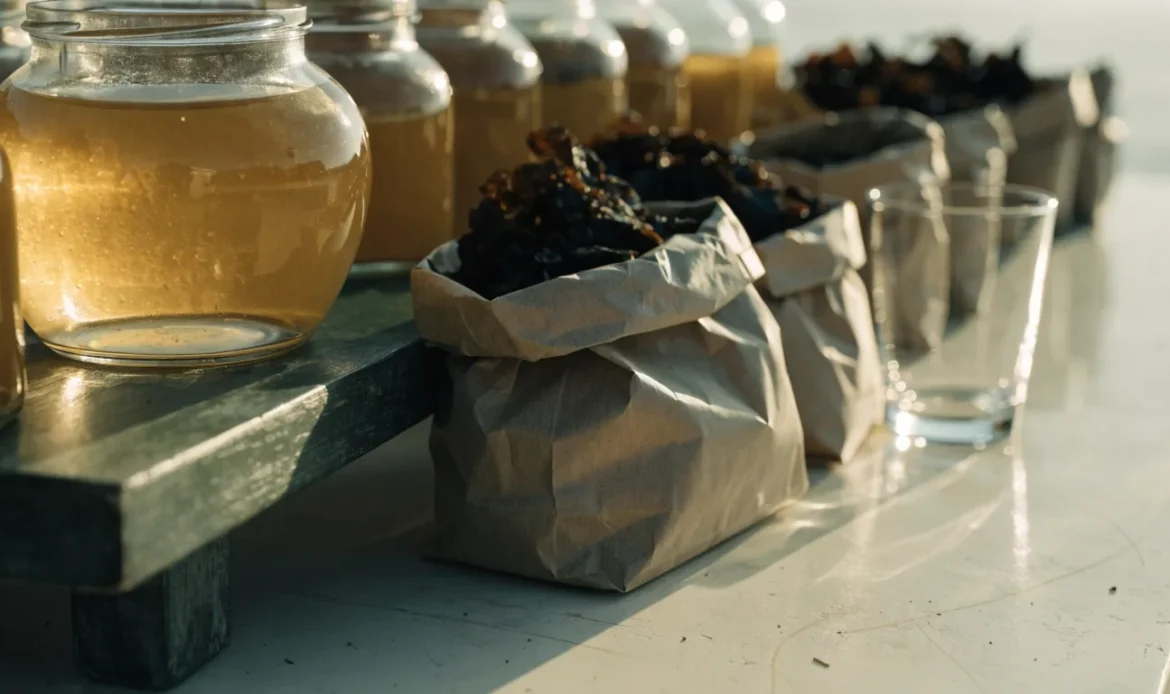
Short answer: You can find sea moss near you at places like Caribbean markets, health food shops, some grocery stores, and from local or online sellers who ship nearby. Before you buy, check the product format, the seller’s transparency about source and testing, and how to store or use the sea moss.
This page answers the question directly. Then it walks you through formats, what to check, a practical decision checklist, a comparison guide, and the best next questions to ask any seller.
Where people typically find “sea moss sold near me”
- Local Caribbean, West African, or international grocery stores. These shops often carry wet (raw) or dried sea moss.
- Health food stores or natural food co-ops. They may carry dried sea moss, gels, powders, or capsules.
- Farmers markets or local vendors. Sometimes small sellers offer freshly prepared gel or dried pieces.
- Specialty online shops that list local pickup or fast regional shipping.
- Supplement stores or pharmacies. These may carry capsules or blended supplements that include sea moss.
Availability varies by region and season. A store that sells sea moss today may not have it next month. Asking the seller about restock schedules helps set expectations.
What “sea moss” can mean — common formats
Different formats suit different uses and storage needs. Below are the common ones and what they mean.
Raw (wet) sea moss
- Sold soaked and sometimes salted. It looks like wet seaweed.
- Pros: Some people prefer the look and texture for making fresh gel.
- Cons: It can spoil if not stored cold. It may need cleaning and soaking before use.
Dried sea moss (whole or chips)
- Dehydrated pieces that are light and shelf-stable.
- Pros: Longer shelf life, easy to rehydrate, light to ship.
- Cons: Quality depends on drying method and handling.
Sea moss gel
- Sea moss that has been soaked, blended with water, then refrigerated or frozen.
- Pros: Ready to use in smoothies and recipes.
- Cons: Typically perishable once made. Check refrigeration and use-by info.
Powdered or capsule forms
- Dried sea moss processed into powder or capsules.
- Pros: Easy to add to drinks or take as a supplement.
- Cons: Processing can hide how much pure sea moss is in the product. Packaging may include other ingredients.
Blended or mixed products
- Sea moss mixed with other algae, herbs, or fruits.
- Pros: Flavor or convenience.
- Cons: Harder to know the exact sea moss content without clear labeling.
How to evaluate sea moss sold near you
When you see sea moss for sale, these checks help you decide if the product matches your needs and risk tolerance.
- Format match: Choose the format you plan to use (raw, dried, gel, powder, capsule).
- Seller transparency: Does the seller list where the sea moss was harvested or processed? Vague answers are common, but clear details show more transparency.
- Harvest and processing dates: Ask for the harvest date and when the product was processed or packaged.
- Lab testing or quality checks: Ask whether the seller tests for contaminants (heavy metals, microbes) or iodine levels. If they say yes, ask to see a certificate of analysis (COA). A COA is a lab report that shows what was tested and the results.
- Ingredients list: For gels and capsules, read the ingredient list. Make sure there are no unexpected additives if you want pure sea moss.
- Storage and shelf life: How should you store it (room temp, refrigerated, frozen)? What is the use-by date after opening?
- Price and quantity: Compare price per weight for similar formats. Watch for very high or very low prices; both can be a sign to ask more questions.
- Seller reputation: Check reviews and whether the seller answers questions promptly.
- Packaging and labeling: Good labels list batch numbers, weight, and clear instructions.
Note on tests and safety: Seaweed can vary in iodine and mineral content. Lab testing is the only way to know the exact content for a batch. Several public health reviews note that iodine levels in seaweed are highly variable and that some seaweed products can contain high iodine or other elements [1][2][3][5]. If you rely on seaweed for diet or have health conditions related to iodine, ask a clinician before adding it regularly [2].
Practical decision checklist — Should I buy this sea moss?
Use this checklist when you are standing in a store or looking at a product page.
- I know which format I want (raw / dried / gel / powder / capsule).
- The seller lists where the sea moss was harvested or grown.
- The seller can describe how the sea moss was processed (dried, frozen, cleaned).
- The label or seller provides a harvest or packaging date.
- The product has a clear ingredient list and no unexpected additives.
- The seller can provide lab tests or a COA showing contaminant checks or iodine levels. If they cannot, I understand that the sea moss’s mineral content is unknown.
- The product packaging includes storage and use instructions.
- The price feels fair for the format and volume, compared to other offers I checked.
- I checked the seller’s return or refund policy.
- If I have health concerns (e.g., pregnancy, thyroid issues), I have asked a healthcare professional before regular use.
If you can check most of these boxes, the product may be suitable for casual use. If multiple boxes are unchecked, consider asking the seller more questions or choosing a different product.
Format comparison table
| Format | Good for | Storage | Quick buyer note |
|---|---|---|---|
| Raw (wet) sea moss | Home-made gel, fresh prep | Keep cold; short shelf life | Inspect for off smells or sliminess; ask how long it’s been wet |
| Dried sea moss | Long storage, rehydrating | Cool, dry place | Easier to ship and store; rehydrates for gel or cooking |
| Sea moss gel | Ready-to-use in drinks | Refrigerate or freeze | Check ingredients and use-by date |
| Powder / capsules | Supplements or smoothies | Room temp or as labeled | Check purity and added ingredients |
| Blends (with herbs/fruits) | Flavor and convenience | Follow label | Confirm sea moss content if you want pure sea moss |
Local buy vs. online buy — pros and tradeoffs
- Local stores (in-person)
- Pros: You can inspect product, ask questions, avoid shipping time and cost.
- Cons: Limited stock and variety. Fewer lab reports may be available on the spot.
- Online retailers
- Pros: Wider selection and access to more detailed product pages or COAs.
- Cons: Shipping can degrade quality for fresh products. Be aware of return policies.
When a seller offers a COA online, you can compare batches. If no COA is available, weigh the trust you have in the seller against your need for precise information.
Shelf life and storage basics
- Dried sea moss: Typically stores longer than wet forms. Keep it dry and away from sunlight.
- Raw (wet) sea moss: Needs cold storage to avoid spoilage. Ask the seller how long it has been kept wet.
- Sea moss gel: Often refrigerated and used within days to weeks, or frozen for months depending on how it was made. Follow the seller’s guidance.
- Powder/capsules: Shelf-stable, but check the package date and any preservatives used.
If a seller gives no storage guidance, ask for it. Improper storage is a common reason a product loses quality.
Questions to ask a seller before buying
- Where did you harvest or source the sea moss?
- When was it harvested? When was it packaged?
- How was it processed and stored before sale?
- Do you test this product for contaminants or iodine? Can you show a COA?
- Are there any additives in this product?
- What is the shelf life and storage recommendation?
- Do you accept returns if the product is not as described?
These questions help you move from a vague listing to something you can evaluate.
Safety and iodine — what the science says (simple summary)
- Seaweed can contain high or variable levels of iodine. This varies by species, location, and processing method [1][2].
- Some public health surveys find a wide range of iodine levels in seaweed products [3]. This means you cannot assume a given serving has the same iodine as another.
- If you have a thyroid condition, or are pregnant, ask a clinician before using seaweed regularly [2].
- Only laboratory testing can confirm iodine or contaminant levels in a product. Asking for a COA is the only reliable way to know the numbers for a batch [4][5].
I include these points because they affect what questions to ask and when to seek professional advice.
What the available information can and cannot prove
- What you can check: packaging details, ingredient lists, label dates, seller answers, and the presence of lab reports.
- What you cannot prove from packaging alone: exact iodine level, trace element contamination, or microbial safety for a specific batch.
- What a lab report (COA) can show: the tests run on that batch and their numeric results. But COAs vary in what they test, so read them carefully.
If a seller shows a COA, look for the test date and batch number. If these do not match the product batch you plan to buy, the COA isn’t definitive for that purchase.
Practical next steps after you buy
- For dried sea moss: store it in a cool, dry place in an airtight container.
- For raw/wet sea moss: keep it refrigerated and use within the recommended time.
- For gel: note the date you opened it and follow use-by dates.
- If you feel unwell after use, stop using and consult a healthcare provider.
Conclusion
If you search for “sea moss sold near me,” you’ll find several places that carry it. The key steps are: pick the format that fits your needs, check seller transparency, and ask for lab tests if you want exact safety or iodine details. Use the checklist above when evaluating a product. If you have health conditions related to iodine or minerals, speak to a healthcare professional before regular use.
Helpful next pages:
- Visit our home page: Home
- Learn more about sea moss uses and formats: Learn
- See current buying options: Shop
- If you need bulk or wholesale information: Wholesale inquiries
- Want to ask a question directly? Contact us
Frequently asked questions
Where is sea moss usually harvested?
Sellers may source sea moss from coastal areas where certain seaweeds grow. The specific location should be listed by the seller. If it is not listed, ask the seller directly.
Can I tell quality by color or smell?
Color and smell give clues but are not definitive. Very strong or off smells can signal spoilage in wet products. Dried pieces should not be moldy. Color varies by species and drying method.
Does “organic” mean safer sea moss?
“Organic” claims depend on certification and local rules. Even certified products should include testing information if you are concerned about contaminants or iodine. Ask the seller for documentation.
How long does sea moss gel last?
Shelf life varies. Sellers should give a use-by date. If not, refrigerate and use within a short period (often a few days to weeks) or freeze for longer storage. Always follow seller guidance.
Should I ask for a COA every time?
If you plan to use sea moss regularly or have health concerns, ask for a COA for the batch you buy. For casual use, you can weigh the seller’s transparency and product handling. A COA is the only way to know exact test numbers.
Can I use dried sea moss to make gel at home?
Yes. Dried sea moss is commonly rehydrated and blended into a gel. Follow safe soaking and cleaning steps, and use clean equipment. If you have health concerns, consult a clinician before regular use.
References
- Harvard T.H. Chan School of Public Health, “Seaweed.” https://nutritionsource.hsph.harvard.edu/seaweed/
- Smyth PPA. “Iodine, Seaweed, and the Thyroid.” European Thyroid Journal, 2021. https://pmc.ncbi.nlm.nih.gov/articles/PMC8077470/
- Food Standards Australia New Zealand, “Survey of iodine levels in seaweed and seaweed containing products,” updated 2025. https://www.foodstandards.gov.au/science-data/monitoring-safety/surveyofiodinelevels
- Operation Supplement Safety, “Sea Moss in Dietary Supplements.” https://www.opss.org/article/sea-moss-dietary-supplements
- Blikra MJ et al. “Consequences of acute and long-term excessive iodine intake: A literature review focusing on seaweed as a potential dietary iodine source.” 2024. https://doi.org/10.1111/1541-4337.70037