
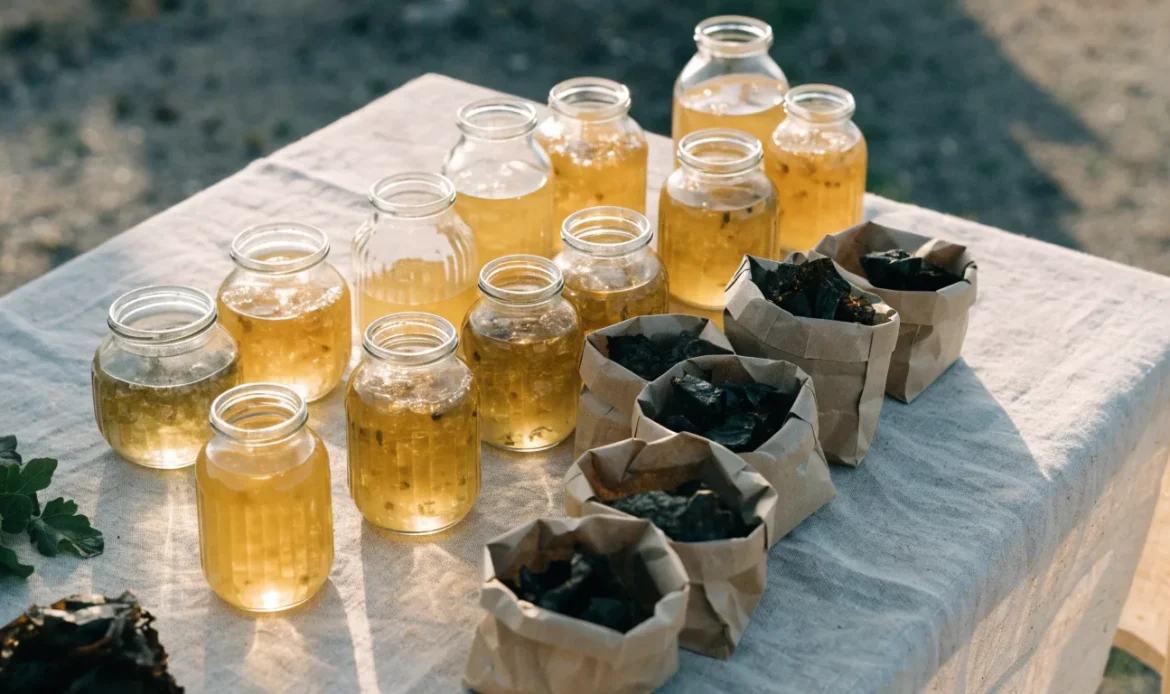
Short answer: You can find sea moss near you at local health-food stores, Caribbean or ethnic groceries, farmers’ markets, some co‑ops, and from online sellers that offer local pickup or fast shipping. For larger needs, wholesalers and bulk suppliers sell to businesses. Below I explain where to look, what questions to ask, how formats differ, and a simple checklist to help you decide.
Why start here: “Who sells sea moss near me?” is a search for places and a search for safe choices. It’s easy to find sellers. It’s harder to know which product fits your needs. This guide helps you do both.
Where people sell sea moss locally
Here are the common places to check near you. Each place has pros and cons. I list what to ask at each type.
Health-food stores and natural grocers
What they sell: Dried pieces, gels, powders, and capsules.
Why check them: Staff may know handling and storage rules. Stores often sell packaged goods with a label.
What to ask: Which species? Where was it harvested or processed? Do you carry test results or a certificate of analysis (CoA)?
Caribbean and other ethnic grocery stores
What they sell: Fresh or dried sea moss and prepared gels. These stores often stock brands used in local communities.
Why check them: They may carry familiar formats and recipes. Prices may be competitive.
What to ask: Is the product raw, dried, or prepared? How long has it been on the shelf? Do you offer private labeling or bulk orders?
Farmers’ markets and co‑ops
What they sell: Local sellers may offer hand‑cleaned wild sea moss, gels, or small batches of dried seaweed.
Why check them: Direct contact with the seller lets you ask detailed questions about harvest and handling.
What to ask: Where was it harvested? How was it cleaned? Can you show packaging or lab results?
Online sellers with local pickup or fast shipping
What they sell: A wide range of formats and brands. Many sellers ship nationwide; some allow local pickup.
Why check them: Larger selection and often more product information online. Some list lab tests or ingredient lists.
What to ask: Do you have a CoA? What is the harvest date and processing date? How is the product packed for shipping?
Wholesalers and bulk suppliers
What they sell: Large quantities for retailers, restaurants, or makers.
Why check them: Better unit price for volume buyers, and some wholesalers provide lab testing and supply chain details.
What to ask: Minimum order size, CoA availability, lead time, storage recommendations. See our wholesale information at /wholesale/.
Independent sellers on social platforms
What they sell: Small batches, artisan products, and sometimes unique formats.
Why check them: You can contact the person directly and ask for details.
What to ask: Can you share tests, batch photos, or references? How do you handle returns or refunds?
How to search “near me” effectively
Use these steps when you search online or call stores.
- Use map apps and type “sea moss” or “sea moss near me.”
- Search for “Carribean grocery” + your city.
- Check the store’s product pages before calling.
- Ask specific questions by phone: species, source, testing, processing.
- Look for reviews and photos from buyers. Reviews can show how the product arrives.
If you need bulk, search “sea moss wholesale” and compare minimums and shipping. Our /wholesale/ page explains common wholesale questions.
Formats and what each means
Sea moss comes in several formats. Each one needs different checks.
- Raw or fresh: Often sold wet or packed in containers. Ask about harvest date and storage. Fresh sea moss spoils if not kept cold or preserved.
- Dried (whole pieces): Long shelf life when dry. Ask about drying method and date. Check for signs of moisture.
- Gel or prepared: Ready to use. Check ingredients and storage instructions. Ask about preservatives and shelf life.
- Powder: Dried and ground. Ask if it’s purely sea moss or mixed. Check particle consistency.
- Capsules or tablets: Standard supplement format. Check label and serving size. Ask for third‑party testing if available.
For help deciding which format fits you, see our format guide at /learn/.
What you can check — and what you can’t prove without testing
When you buy, some things you can verify quickly. Other facts require lab data.
You can check:
- Label details: ingredients, processing location, and contact info.
- Packaging: date codes, batch numbers, and storage instructions.
- Seller transparency: whether they share harvest or processing details.
- Visual quality: color, smell, and texture for prepared products.
You cannot prove:
- Exact iodine level or heavy‑metal content without a lab test.
- The exact harvest site or water quality unless the seller provides verifiable source details and testing.
- Safety for a specific person without medical advice.
If a seller provides a recent certificate of analysis (CoA), that document is the best way to verify lab measurements for iodine, heavy metals, and microbes.
On iodine and variability: Seaweeds can contain high and variable amounts of iodine. That variability is known in nutrition research and food safety work. If you are concerned about iodine exposure, ask for iodine test results or speak with a health professional. (See References [1], [2], [3], [5]).
A practical buyer checklist
Use this checklist when calling, visiting, or ordering online. It’s short and usable.
- Product format (raw, dried, gel, powder, capsule): ______________________
- Species name (if known): ______________________
- Harvest or production date: ______________________
- Country or region of harvest/processing: ______________________
- Storage instructions and shelf life: ______________________
- Certificate of Analysis (CoA) available? (Y/N) ________ If yes, request a copy.
- Tests shown on CoA (iodine, heavy metals, microbes): ______________________
- Packaging batch number or lot code: ______________________
- Minimum order for wholesale (if buying bulk): ______________________
- Return or refund policy: ______________________
- Contact for questions and complaints: ______________________
Below is a compact decision table you can print or email to sellers.
| Question to ask | Why it matters | Good answer to expect |
|---|---|---|
| Do you have a CoA for this batch? | Shows lab testing for iodine, metals, microbes | “Yes — I can email the CoA with batch number.” |
| What species is this? | Different species vary in texture and taste | “Chondrus/Gracilaria/etc., listed on label.” |
| Where was it harvested? | Source affects trace elements and reputation | A specific region or processing country named. |
| When was it harvested/processed? | Freshness and shelf life depend on this | A clear harvest or processing date. |
| How should I store it? | Storage affects safety and quality | “Refrigerate after opening” or “keep dry.” |
| What is your return policy? | Helps if product is damaged or not as described | Clear return window and contact method. |
How to read labels and CoAs
Labels may show ingredients and a processing address. A CoA is a lab document that lists measured values for specific analytes.
If a seller shares a CoA, check:
- The CoA date and the batch number. It should match the product batch.
- Which tests were run (iodine, heavy metals like arsenic/lead/cadmium, microbial counts).
- The lab accreditation or contact details for the testing lab.
If no CoA is available, ask why. Some small producers may not test every batch. That does not automatically mean the product is unsafe. It does mean there is more uncertainty about the product’s precise contents.
For general information on seaweed and testing considerations, see the Harvard nutrient review and food safety surveys in References [1] and [3].
Practical safety notes about iodine and testing
- Iodine levels in seaweed can vary widely depending on species and location. This is supported by nutrition and food-safety literature. [1][2][3][5]
- You cannot know the iodine content of a product without testing. Ask for a CoA that lists iodine if you need that information. [2][3][5]
- If you have a thyroid condition or are taking iodine-sensitive medication, ask your health provider before adding seaweed products to your diet. I cannot give medical advice here.
General testing sources and guidance: Operation Supplement Safety discusses sea moss as a supplement product and notes variability in labeling and testing practices. [4]
Buying in bulk: extra questions
If you are buying for a business or large household, add these questions:
- Minimum order quantity and unit price.
- Storage and shelf-life in bulk amounts.
- Lead time and shipping method for large orders.
- Will the seller provide CoAs for each batch shipped?
- Do they offer sample batches or quality checks before the full order?
For wholesale options, visit /wholesale/ or contact us at /contact/ to discuss supply needs.
Common red flags
Watch for these warning signs:
- Vague or missing origin information.
- Sellers who refuse to provide contact details.
- No batch number or production date on the label.
- Lack of clear storage instructions.
- No CoA for products that claim health benefits.
Red flags do not prove a product is unsafe, but they suggest you should proceed with more caution.
Next steps and useful pages
- Learn more about sea moss formats and preparation at /learn/.
- If you want product options, see our selection at /shop/.
- For bulk or business orders, start with /wholesale/.
- General company information and home page: /.
- Need to contact us with specific questions? Use /contact/.
Conclusion
Finding who sells sea moss near you is usually simple. The harder part is choosing a product that fits your needs and comfort level. Ask specific questions about species, harvest date, and testing. Request a CoA if you want lab data. Use the checklist above when you call or visit sellers. If you need wholesale details, check the /wholesale/ page or contact a seller directly. Whatever you buy, store it as instructed and ask for clear return terms.
Continue reading
Frequently asked questions
Can I buy sea moss at a regular grocery store?
Yes. Some larger grocery stores carry sea moss in the health-food aisle or in the frozen section. Always check the label and storage instructions.
How do I know if sea moss is real or pure?
Check the ingredient list for added substances. Ask the seller for a batch number and a CoA. Visual checks (smell, color, texture) can help, but lab tests are the only way to confirm content.
Is iodine testing common for sea moss products?
Testing practices vary. Some sellers provide iodine results on a CoA. Others do not test every batch. If iodine matters to you, request a CoA that lists iodine content.
What is a CoA and why should I ask for it?
A CoA is a certificate of analysis from a lab. It lists measured values like iodine or heavy metals. It helps verify what is actually in a product.
Can I buy sea moss in bulk from local sellers?
Yes. Many wholesalers and some retailers offer bulk ordering. Ask about minimums, lead time, CoAs, and storage needs.
What if a seller refuses to answer my questions?
That could be a sign of low transparency. Consider buying elsewhere or ask for written information before you make a purchase.
References
- [1] Harvard T.H. Chan School of Public Health, “Seaweed.” https://nutritionsource.hsph.harvard.edu/seaweed/
- [2] Smyth PPA. “Iodine, Seaweed, and the Thyroid.” European Thyroid Journal, 2021. https://pmc.ncbi.nlm.nih.gov/articles/PMC8077470/
- [3] Food Standards Australia New Zealand, “Survey of iodine levels in seaweed and seaweed containing products,” updated 2025. https://www.foodstandards.gov.au/science-data/monitoring-safety/surveyofiodinelevels
- [4] Operation Supplement Safety, “Sea Moss in Dietary Supplements.” https://www.opss.org/article/sea-moss-dietary-supplements
- [5] Blikra MJ et al. “Consequences of acute and long-term excessive iodine intake: A literature review focusing on seaweed as a potential dietary iodine source.” 2024. https://doi.org/10.1111/1541-4337.70037