
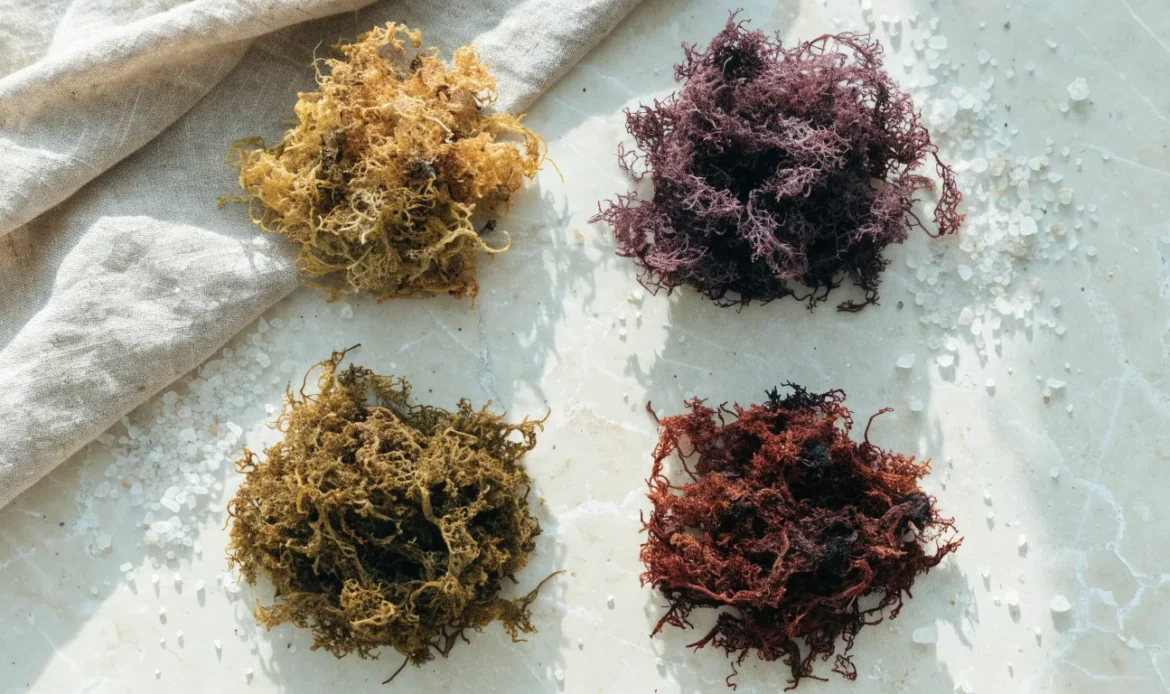
Short answer first: Full spectrum sea moss is a product made from a mix of seaweed species or a wide range of natural compounds present in whole seaweed, processed to keep many original parts. It is a label used to signal variety and less-processing than single-extract products. How a specific product is made, what species are included, and what tests were done are the important details to check before buying.
Why read this? This page explains what “full spectrum” can mean in plain terms. It shows common formats, what you can verify on a product, and a short decision guide to help you pick the right format or supplier next.
What “full spectrum” usually means
- A mix of species: Some sellers use several seaweed species together, rather than one named species. This can be called a “full spectrum” blend.
- A broader compound profile: The term may also mean the product keeps many of the natural components of the seaweed (fibers, minerals, pigments), not just a single isolated extract.
- Less-refined processing: It often implies less intensive extraction or fractionation. For example, whole dried pieces or whole-plant powder instead of isolated extracts.
None of these meanings are fixed. The phrase “full spectrum” is not a scientific standard. You must look for details on the label or ask the seller what they mean by it.
Why the exact meaning matters
“Full spectrum” does not guarantee safe levels of any nutrient or contaminant. Seaweeds can vary a lot based on species, location, season, and processing. That variability affects things people often ask about, such as iodine and heavy metals. For iodine specifically, research shows seaweed iodine levels vary widely and can sometimes be high enough to matter for people with thyroid issues [2][3][5]. This is why buyers should check test results or product information rather than rely on the label wording alone.
Sources like the Harvard School of Public Health explain that seaweeds are diverse and their composition varies, and public health surveys have found large differences in iodine and other nutrients across seaweed products [1][3].
Common formats of full spectrum sea moss
Each format suits different needs. Below are the main formats you will see and what to expect.
- Raw / Whole dried sea moss
- Pieces or strands, often sun-dried or dehydrated.
- Needs rinsing and soaking before use.
- Can be stored dry for longer periods if kept cool and sealed.
- Gel (prepared by soaking and blending)
- Made from soaked moss blended with water and chilled.
- Ready to use, usually refrigerated.
- Shorter fridge shelf life than dried forms.
- Powder (ground whole seaweed)
- Dried then milled.
- Easy to add to smoothies or recipes.
- Shelf life depends on moisture control and packaging.
- Capsules or softgels
- Powder or extract in measured doses.
- Convenience, but you lose easy visual inspection of the raw material.
- Bulk or wholesale forms
- Large dry sacks, bulk powders, or industrial gels.
- For food producers or retail resellers.
- Requires more attention to storage and traceability.
What sellers call “full spectrum” can appear in any of these forms. The key is to find product details for the format you prefer.
How full spectrum sea moss is sourced and processed
Here are typical stages. Each step affects the product profile and what you can verify.
- Harvesting: Seaweed is collected by hand or machinery from coastal areas. Harvest date and location matter.
- Cleaning: Salt, sand, small animals, or algae growths are removed.
- Drying or dehydration: Sun-drying or mechanical dehydration reduces moisture. Drying method affects color and texture.
- Blending or milling: Multiple species may be combined or whole pieces may be ground into powder.
- Packaging: Airtight sealed bags, jars, or bulk containers. Packaging affects shelf life and stability.
- Post-processing tests: Some suppliers run lab tests for microbes, heavy metals, and iodine. Others do not.
Ask the seller for the harvest date, species list, and method of drying. These details help you compare items and understand variability.
What you can and cannot prove about a product from its label
What you can check:
- Ingredient list (species names if provided).
- Net weight and format (e.g., dried whole sea moss, powder).
- Any allergen statements or added ingredients.
- Lot or batch number and harvest date, if listed.
- Packaging date or “best by” date and storage instructions.
- Stated lab testing information or “third-party tested” claims.
What you cannot prove from a label alone:
- Exact iodine or heavy metal content unless test results are provided.
- The detailed species mix and their relative amounts unless the seller lists them.
- Whether the harvest followed specific environmental or quality standards unless certified.
- Lab test authenticity without a test report or chain of custody.
Always ask for lab reports where safety or nutrient levels matter to you.
Safety signals and common tests to ask for
Seaweeds can contain iodine and trace contaminants that vary by species and harvest location. Ask the seller for:
- Heavy metals panel (e.g., arsenic, cadmium, lead, mercury) if you are concerned about contamination.
- Microbial testing (total plate count, yeast and mold, E. coli, Salmonella) for products that are raw or gel.
- Iodine content or analysis, especially if you have thyroid concerns or take iodine-containing supplements.
- Date of testing and lab accreditation or method used.
A lab report usually lists testing methods and limits. If a seller cannot provide any lab results, treat the product as one with unknown content and consider buying from another source or choosing a dried form that can be stored longer until you can verify.
References show iodine levels in seaweed products vary widely and that excessive iodine intake can have consequences for some people, so testing and transparent information are important [2][3][5]. Operation Supplement Safety highlights the importance of testing and clear labeling for sea moss dietary products [4].
Decision guide: how to choose a full spectrum sea moss product
Use this simple table to match format to purpose and what to check before buying.
| You want… | Best formats | What to check before buying |
|---|---|---|
| To inspect raw material and store long-term | Whole dried sea moss | Species list, harvest date, drying method, lot number, visual quality, packaging, storage instructions |
| Ready-to-use convenience | Gel | Microbial testing results, refrigeration advice, preparation method, shelf life |
| Easy mixing into food | Powder | Species list, drying temperature, moisture content, tamper seal, test results for contaminants |
| Measured dosing for convenience | Capsules / softgels | Ingredient list, dose per capsule, third-party testing, lot number |
| Buy in bulk for resale | Wholesale dry or powder | Traceability, certificates, test reports, shelf life, MOQ and storage conditions |
This guide helps you pick the right format and the right questions to ask.
Practical buyer checklist (use before buying)
- Identify the format you want (dried, gel, powder, capsule, bulk).
- Ask the seller for species names included in the product.
- Request harvest date and location, if available.
- Ask for lab reports that show heavy metals, microbial tests, and iodine content.
- Check packaging date, lot number, and storage instructions.
- Verify shelf life and recommended storage conditions.
- Ask how the product was dried (sun-dried, dehydrated, freeze-dried).
- For blends, ask for the proportions or at least which species are dominant.
- If buying wholesale, ask about traceability, minimum order, and shipping/storage conditions.
- Compare price per usable weight (consider moisture content) and shipping time.
- If you have health concerns (e.g., thyroid), consult your health professional before use and share test results.
- Save receipts and any lab reports for reference.
Use this checklist in messages or calls with a seller. Keep copies of any lab reports or certificates you receive.
Questions to ask a supplier right now
- Which species are included in your “full spectrum” product?
- What are the harvest dates and harvest areas?
- Do you have lab test results for iodine and heavy metals? Can you share them for my lot?
- How was the sea moss dried and processed?
- What is the recommended storage and the shelf life once opened?
- Is this product intended for food use, supplements, or industrial use?
- Do you offer traceability or a certificate of analysis for each batch?
Answers to these questions help you decide if the product fits your needs.
Handling, storage, and basic preparation tips
- Dry forms: Keep sealed in a cool, dry place. Moisture invites mold.
- Gel: Keep refrigerated and use within the suggested time. Discard if you see mold, off smells, or serious texture changes.
- Powder: Store sealed with desiccant if provided. Avoid clumping from humidity.
- Rinse raw sea moss before use to remove sand or debris. Soak and change water if needed.
- If you plan to rehydrate and freeze gel for long-term storage, follow supplier recommendations for freezing and thawing.
These steps reduce food-safety risks and keep product quality steady.
What the available information cannot prove
- That any product labeled “full spectrum” contains specific amounts of any mineral or compound without lab data.
- That a product is safer or “better” purely because it uses the term “full spectrum.”
- That a product is free of certain contaminants unless testing for those contaminants is available and clearly linked to the batch you buy.
Be cautious with labels that use broad marketing terms without supporting documentation.
Useful next steps
- If you want to learn more about seaweed in general, visit our learning hub at /learn/.
- To browse product formats and see what is offered, see our shop at /shop/.
- If you need wholesale information or bulk pricing details, visit /wholesale/.
- For immediate questions or to request test reports, contact us at /contact/.
- For general site info, return to the home page: /.
Conclusion
“Full spectrum sea moss” is a descriptive term that can mean different things. It can indicate species variety, a broader profile of natural compounds, or less-refined processing. The label alone cannot tell you the iodine level, contaminant load, or exact species mix. Before buying, check species names, harvest dates, processing methods, and — when safety or nutrient levels matter — ask for batch-specific lab reports. Use the checklist and decision guide on this page to pick the right format and supplier. If you have health concerns, especially about iodine or thyroid issues, talk to a health professional and share any test results you get.
Continue reading
Frequently asked questions
Is “full spectrum” a regulated term for sea moss?
No. “Full spectrum” is a marketing term, not a regulated standard. Ask the seller what they mean by it and request supporting details.
Can I rely on a “full spectrum” label to know iodine content?
No. Iodine content varies by species and location. Only a lab analysis for the specific batch can tell you iodine levels [2][3][5].
Should I worry about heavy metals in sea moss?
Seaweed can absorb minerals from its environment. Testing for heavy metals is a reasonable precaution for some buyers. Ask for lab results if this matters to you.
Is dried sea moss safer than gel?
Dried forms are less likely to grow microbes if stored properly. Gel is moist and needs refrigeration and faster use, so it typically needs more careful handling and microbial testing.
Can I blend different species to make my own “full spectrum” mix?
Yes. Some people mix species. If you do, be aware that combined iodine and mineral levels add up. Consider testing if you plan to eat it regularly.
Where can I get more help or buy samples?
See our learning hub and shop pages. Contact a supplier and ask for sample size, batch test reports, and storage advice.
References
- [1] Harvard T.H. Chan School of Public Health, “Seaweed.” https://nutritionsource.hsph.harvard.edu/seaweed/
- [2] Smyth PPA. “Iodine, Seaweed, and the Thyroid.” European Thyroid Journal, 2021. https://pmc.ncbi.nlm.nih.gov/articles/PMC8077470/
- [3] Food Standards Australia New Zealand, “Survey of iodine levels in seaweed and seaweed containing products,” updated 2025. https://www.foodstandards.gov.au/science-data/monitoring-safety/surveyofiodinelevels
- [4] Operation Supplement Safety, “Sea Moss in Dietary Supplements.” https://www.opss.org/article/sea-moss-dietary-supplements
- [5] Blikra MJ et al. “Consequences of acute and long-term excessive iodine intake: A literature review focusing on seaweed as a potential dietary iodine source.” 2024. https://doi.org/10.1111/1541-4337.70037