
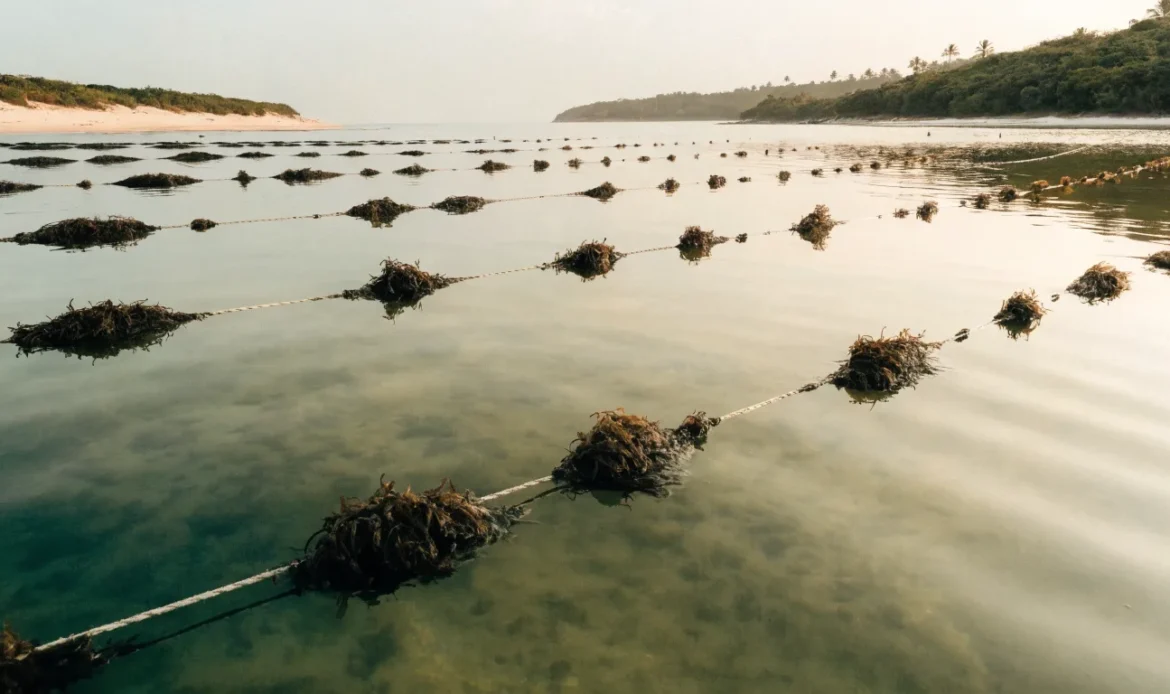
Short answer first: East African sea moss is a common name for seaweed harvested along the eastern coast of Africa and nearby islands. It usually refers to red or brown seaweeds that people dry, sell, and use in food, gels, powders, or supplements. What matters most when you buy it is the format you need, clear sourcing information, and simple safety checks like testing for iodine and contaminants.
This guide explains what to expect from products labeled “East African sea moss.” Read the checklist near the middle to help you pick a product. Use the links at the end to find more guides and shopping options.
What people mean by “East African sea moss”
“Sea moss” is a common name. It covers several kinds of seaweed. In East Africa, harvests come from coastal areas and islands in the Indian Ocean. Sellers may use the regional term “East African” to describe where the seaweed was collected or processed. That label tells you a region, not a species. It does not by itself guarantee quality, safety, or testing.
Seaweeds are very diverse. Different species look, smell, and behave differently in water and in recipes. Some types are used more for cooking; others are used more in supplements or for industrial uses. When you see “East African sea moss,” expect variation in color, texture, and processing.
Common product formats and how they differ
Sellers often sell sea moss in several formats. Each format has trade-offs. Pick the format that matches how you intend to use the product.
- Dried whole sea moss
- What it is: Seaweed that has been cleaned and dried. Pieces may be whole or broken.
- Pros: Long shelf life when kept dry. Good for making gels and cooking.
- Cons: Needs cleaning and soaking before use. Texture and color vary by harvest.
- Dried chopped or flaked
- What it is: Smaller pieces of dried seaweed.
- Pros: Easier to measure and rehydrate. Good for teas or recipes.
- Cons: May include powder or dust. Watch for added fillers.
- Powdered sea moss
- What it is: Fine ground powder from dried seaweed.
- Pros: Convenient for mixing into drinks, smoothies, or dry blends.
- Cons: Harder to verify purity at home. May be blended with other ingredients.
- Gel (prepared)
- What it is: Sea moss that has been soaked, blended with water, and bottled as a gel.
- Pros: Ready-to-use for smoothies and sauces.
- Cons: Shorter refrigerated life. Storage and preservatives matter.
- Capsules or tinctures
- What it is: Processed into capsules or liquid extracts.
- Pros: Easy to dose and carry.
- Cons: Often sold as supplements. Check labeling and testing.
- Bulk raw for wholesale
- What it is: Large quantities sold to manufacturers, food processors, or retail shops.
- Pros: Lower unit cost for large buyers.
- Cons: Requires more checks on traceability and testing.
When choosing, ask the seller which species or common name they use, and whether the product is wild-harvested or farmed. That information helps you match a format to a use.
Sourcing and traceability: what you can check
Labels and seller information can tell you something. But no single label line proves safety on its own. Here are useful items to check and why they matter.
- Harvest location or region
- Why check: It helps you understand local water conditions and shipping routes.
- What it cannot prove: A country or region name alone does not guarantee that a batch was tested or free from contamination.
- Wild-harvested vs farmed
- Why check: Farming can provide more controlled growing conditions. Wild harvest reflects natural conditions.
- What it cannot prove: “Farmed” is not the same as “tested.” Farming practices vary widely.
- Harvest date and batch number
- Why check: Recent harvest dates and a batch number support traceability.
- What it cannot prove: A date and number do not prove lab testing took place. Ask for accompanying test results.
- Third-party testing and Certificates of Analysis (COAs)
- Why check: A COA from a recognized lab can report iodine, heavy metals, and microbial data for a batch.
- How to read it: Look for a batch match (the COA should match the product lot you are buying). Confirm which tests were run and the lab name.
- What it cannot prove: A COA only covers the tested sample. It does not guarantee all future batches will match unless testing is routine.
- Product ingredients and added substances
- Why check: Powders or blends can contain other seaweeds, fillers, flavorings, or preservatives.
- What it cannot prove: An ingredient list might omit cross-contamination sources unless stated.
- Supplier transparency and written policies
- Why check: Clear return, testing, and sourcing policies signal a seller that expects questions.
- What it cannot prove: Policies are business promises, not test results.
Operation Supplement Safety highlights that sea moss in supplements is treated like other supplement ingredients. Label accuracy and testing are important for consumer safety [4]. If a seller cannot share basic batch information, ask why.
Safety notes: iodine, contaminants, and variability
Seaweeds vary greatly in composition. That includes iodine and other elements. This variability matters for safety.
- Iodine can be high and variable
- Seaweed species, growing location, and season influence iodine content. Some seaweeds are much higher in iodine than others. High or variable iodine intake can affect the thyroid for some people [2,5].
- Heavy metals and other contaminants
- Seaweed can concentrate elements from seawater. Levels depend on local water quality. Testing for heavy metals and possibly for pathogens is a useful step in quality control.
- Lab testing reduces uncertainty
- A third-party lab report that covers iodine, heavy metals, and microbial measures gives you specific data for a batch. It reduces guesswork compared to relying only on region or brand claims.
- Limitations of labels and origin claims
- A label that states a country or region does not mean a batch is free from contaminants. Labels rarely provide full testing detail. Ask to see a COA that matches the product lot if you want specific reassurance.
If you have a medical condition (for example, a diagnosed thyroid condition), are pregnant, or take medication that affects iodine or thyroid function, speak with a healthcare provider before adding seaweed products to your diet. This is general safety advice and not a medical diagnosis.
References such as the Harvard T.H. Chan School of Public Health explain that seaweed is nutritious but variable, and that iodine content can be high for some seaweeds [1]. Reviews also note that excessive iodine intake from seaweed is a possible concern and that assay results vary by product and region [2,5]. Food safety bodies conduct surveys to measure iodine and related levels in seaweed products to inform guidance [3].
How to clean and prepare dried sea moss (practical steps)
Below are general steps people use to prepare dried sea moss for home use. These steps are about handling and cleaning. They do not claim health benefits.
- Inspect the dried sea moss
- Look for sand, shells, or obvious debris. Note color and smell. Some odor is normal for seaweed.
- Rinse briefly
- Hold the dried pieces under cool running water. Shake gently to remove surface sand and small debris.
- Soak
- Place rinsed pieces in clean water to rehydrate. Replace the water if it becomes cloudy. Soaking helps expand and soften the pieces.
- Trim and remove small fragments
- After rehydrating, pick out any hard shells, stones, or fibrous bits you do not want.
- Make a gel (optional)
- Blend the soaked sea moss with clean water until smooth for a gel. Store the gel in a clean container and refrigerate.
- Use or cook
- Add rehydrated sea moss or gel to recipes as needed. Follow recipe guidance for cooking time and temperature.
These steps are simple handling routines. Packaging or seller instructions may differ. Always follow any preparation or storage instructions provided by the product label.
A practical buying checklist (decision guide)
Use this checklist when evaluating an East African sea moss product. Score each line as Yes / No / Unknown. A “Yes” on more items means lower uncertainty.
| Item to check | Why it matters | What to look for |
|---|---|---|
| Clear harvest location or region | Helps assess source waters and transport routes | A specific coastline or island is clearer than only a continent name |
| Harvest date and batch number | Enables traceability | A visible lot number that matches any test reports |
| Third-party COA available | Shows batch testing for iodine, metals, microbes | COA lists tests, lab name, and matches product lot |
| Ingredient list | Reveals if the product is pure seaweed or a blend | No hidden fillers; clear species or type if possible |
| Seller transparency | Makes follow-up easy | Clear contact info and return policy |
| Wild-harvested vs farmed stated | Helps set expectations for variability | Note the claim and ask about harvesting practices |
| Format suits your use | Ensures you can use the product as intended | Dried whole for gel/cooking; powder for mixers; gel for ready use |
| Storage and handling instructions | Preserves product quality | Clear fridge or pantry guidance, and use-by suggestions |
| Price and visible unit size | Helps compare value | Watch for very low prices that lack testing or clear source info |
| Wholesale options and terms (if buying bulk) | Needed for business use | Ask about batch testing frequency and shipping documentation |
Decision tips:
- If you need a product for cooking and want to control preparation, dried whole sea moss is a common choice.
- If you want convenience, choose gel or powdered formats, but look for clear freshness and storage practices.
- If you have a medical concern about iodine or contaminants, prioritize products with recent COAs and consult a clinician.
How sellers and buyers can improve transparency
If you are a buyer:
- Ask for a COA that matches the product lot. If a seller cannot provide it, ask what testing they do and how often.
- Request photos or videos of the product and packaging if buying online.
- Choose sellers who list harvest dates, batch numbers, and contact details.
If you are a seller:
- Keep batch records and make COAs available on request.
- Publish sourcing and handling policies.
- Label products clearly. Include storage guidance and ingredient lists.
Transparency reduces guesswork. It does not remove all risk, but it helps you make an informed choice.
Next steps and useful links
- Want more background on seaweed in the diet? See our learn hub: Learn
- Ready to compare formats or buy small quantities? Visit: Shop
- Buying for a business? View wholesale options and requirements: Wholesale
- Have a question about our products or need a COA? Contact us: Contact
- Return to the homepage: Home
Conclusion
“East African sea moss” is a regional label for seaweed harvested from the eastern African coastline and nearby islands. The key steps for a careful buyer are to decide the format you want, check sourcing and batch details, and look for lab testing that matches the product lot. No single label solves every question. If you have health concerns, especially about iodine or thyroid conditions, talk with a healthcare professional and request batch-specific test results before use.
For more learning, start at our Learn (/learn/) hub. If you know what format you want, see our Shop (/shop/). For bulk orders, explore Wholesale (/wholesale/). If you need specific answers, please Contact (/contact/) us or return home: Home (/).
Frequently asked questions
Does “East African” tell me the species of seaweed?
No. “East African” refers to a region, not a scientific name. Ask the seller for the species or common type if that matters to you.
Are there standard tests I should expect for sea moss?
Useful tests include iodine content, heavy metals, and microbial screening. A COA should list which tests were done. Ask for the lab name and the matching batch number.
Can I make gel from dried East African sea moss?
Yes. People commonly rehydrate and blend dried sea moss to make gel. Follow cleaning and soaking steps and use clean containers. Follow seller guidance if provided.
Is labeling regulated for sea moss products?
Regulations vary by country and by product type (food, novel food, or supplement). Labeling and testing requirements differ. If you need regulatory assurance, ask the seller what rules they follow and whether testing is routine.
How can I reduce the risk of buying low-quality sea moss online?
Choose sellers with clear harvest info, batch numbers, and available COAs. Read the ingredient list, check return policies, and ask direct questions before buying.
References
- Harvard T.H. Chan School of Public Health, “Seaweed.” https://nutritionsource.hsph.harvard.edu/seaweed/
- Smyth PPA. “Iodine, Seaweed, and the Thyroid.” European Thyroid Journal, 2021. https://pmc.ncbi.nlm.nih.gov/articles/PMC8077470/
- Food Standards Australia New Zealand, “Survey of iodine levels in seaweed and seaweed containing products,” updated 2025. https://www.foodstandards.gov.au/science-data/monitoring-safety/surveyofiodinelevels
- Operation Supplement Safety, “Sea Moss in Dietary Supplements.” https://www.opss.org/article/sea-moss-dietary-supplements
- Blikra MJ et al. “Consequences of acute and long-term excessive iodine intake: A literature review focusing on seaweed as a potential dietary iodine source.” 2024. https://doi.org/10.1111/1541-4337.70037