
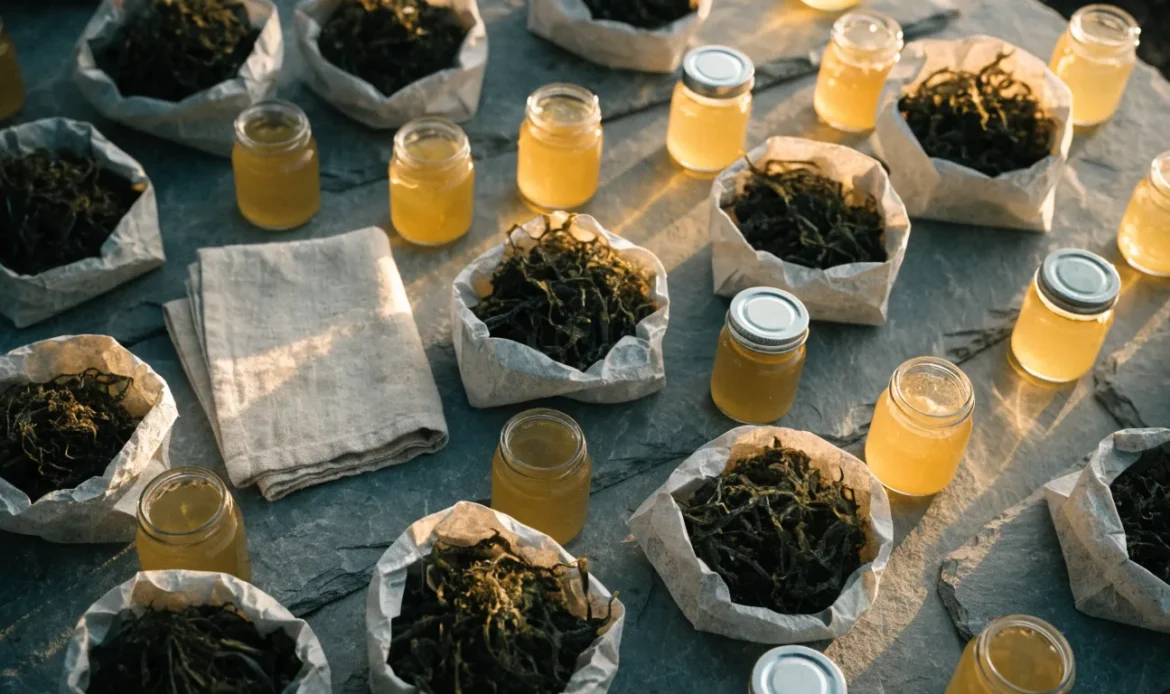
Short answer: You can buy sea moss at health food stores, some supermarkets, Asian and Caribbean markets, farmers markets, online retailers, and specialty wholesalers. Each place sells different forms (dried, raw, gel, powder, capsules). Read labels and ask sellers about origin and processing before you buy.
This guide answers the question first. Then it helps you choose the best store and product for your needs. It lists practical checks to make in store or online. It also shows how to prepare and store sea moss safely. Use this even if you do not buy from Zen Wholesalers.
Where to look: common store types that sell sea moss
Here are the main places people find sea moss. Each type of store often carries different product formats and offers different levels of information.
- Health food stores and natural grocers
- Often carry dried sea moss, gels, powders, and capsules.
- Staff may be able to point you to brand information and basic preparation tips.
- Supermarkets and big-box stores
- May stock packaged sea moss products in the natural foods aisle.
- Selection varies by region. Look for sealed packages and clear labels.
- Caribbean markets and ethnic grocery stores
- Good places to find traditional forms and raw sea moss that local communities prefer.
- Staff may know local preparation methods.
- Asian supermarkets and specialty seaweed stores
- Often carry a wide range of seaweed products, including different sea moss species and dried sheets or pieces.
- Farmers markets and food co-ops
- Some local sellers offer prepared sea moss gel or small-batch dried sea moss.
- Ask about harvest methods and handling.
- Online retailers and marketplace sellers
- Large online stores, specialty seaweed shops, and direct-to-consumer brands sell many formats.
- Online listings may offer detailed ingredient lists and customer reviews, but verify seller transparency.
- Wholesale suppliers and bulk distributors
- If you want larger quantities for resale or a business, search for reputable wholesalers or supply firms. Wholesale sellers often require business details before selling bulk lots.
What formats you will find and where to look for them
Knowing formats helps you choose the right store for your needs.
- Dried sea moss
- Common in health food stores, ethnic markets, and online shops.
- Dried pieces are lightweight to ship and store. They need rehydration before use.
- Raw or fresh sea moss
- More likely in Caribbean markets, some specialty stores, and local vendors.
- Fresh sea moss is perishable and handled differently from dried forms.
- Sea moss gel
- Often sold in health food shops, some farmers markets, and online.
- Gel is convenient for cooking and smoothies but needs refrigeration.
- Powder and capsules
- Easy to find in health food stores and online as supplements or ingredients.
- Check labels carefully. The term “dietary supplement” has regulatory meaning; see consumer-safety guidance.
- Blends and flavored products
- Many stores sell sea moss mixed with other ingredients. Read the label for added sugars or preservatives.
How to choose a trustworthy seller — practical checks
Before you buy, check these items. They help you compare sellers and spot missing information.
Quick buyer checklist:
- Is the product labeled with form (dried, gel, powder, capsule)?
- Does the seller state the seaweed species or harvest region?
- Are ingredient lists and any added ingredients clear?
- Does the package include storage instructions?
- Is there a contact method for the seller (phone, email, web)?
- Do online listings show photos of the actual product, not just stock art?
- Are there third-party test results or safety statements available?
- For supplements: is there a lot number or manufacturer contact?
These checks do not guarantee safety or quality. They show whether the seller is transparent. Lack of information is a reason to ask questions or choose another seller.
Decision guide: which store to choose, based on your need
| Your need or goal | Best store types to try first | Why |
|---|---|---|
| You want small amounts to try | Health food store, supermarket, online retailer | Easy to buy single packages and compare brands |
| You want traditional or fresh sea moss | Caribbean market, local vendor, farmers market | These sellers often carry fresh or community-preferred forms |
| You want convenience (ready-to-use gel) | Health food store, online seller, farmers market | Gel is ready for smoothies or cooking |
| You want powder or capsules | Health food store, pharmacy-style natural section, online | Good for mixing or taking as a supplement |
| You need bulk or resale quantities | Wholesale supplier or distributor | Wholesale channels carry larger lots and business terms |
| You want detailed product info and traceability | Specialty online shops or brands with clear labeling | Online listings can include origin, processing, and tests |
Use the guide to pick where to start your search. If you find a seller, use the checklist above to verify details.
What to check on labels and listings
Labels and product pages vary. Here are useful things to look for and why they matter.
- Ingredient list
- Shows whether sea moss is pure or combined with other items.
- Species or common name
- Some listings name the seaweed species. This can help if you are comparing types.
- Country or region of harvest
- Harvest region gives context. It does not prove safety or quality by itself.
- Processing and packaging statements
- Look for “dried,” “raw,” “gel,” or “powder.” Also note whether the product was washed, sun-dried, or heat-processed.
- Storage instructions and shelf handling
- Fresh or gel products should include refrigeration guidance. Dried products often advise cool, dry storage.
- Manufacturer or seller contact
- A phone number, email, or website lets you ask follow-up questions.
- Testing and third-party reports
- Some sellers post lab tests or safety checks. If tests are available, read what they cover. Tests can help with specific concerns like contaminants, but not all tests check the same things.
- Warnings and advisory statements
- Seaweed can contain iodine and other minerals. Labels may include cautions. If you have health concerns that relate to minerals or iodine, ask a healthcare professional.
When information is missing online, message the seller before buying. Ask specific questions about processing, origin, and safety testing.
Preparing and storing sea moss safely — process-first steps
Follow basic food safety practices when you handle sea moss. This section gives preparation steps and storage cautions. Do not assume the same rules apply to every product or brand. Always follow the seller’s guidance.
Preparing dried sea moss (common method)
- Inspect: Look for off smells, visible mold, or foreign debris. If you see these, do not use the product.
- Rinse: Rinse under cool running water to remove sand and surface debris.
- Soak: Place in a bowl of fresh water and soak until softened. Change the water if it looks cloudy and re-rinse before use.
- Use or blend: After soaking, follow your recipe or seller instructions. Some people simmer briefly for recipes that require cooking.
Preparing fresh or gel sea moss
- Keep cold: Keep fresh sea moss refrigerated. Gel should be kept at the temperature recommended by the seller.
- Re-check before use: Smell and inspect for changes. If texture or smell seems off, discard.
Storage cautions
- Follow storage instructions on the package. Refrigeration is common for fresh or gel forms. Dried forms usually need cool, dry storage.
- Don’t assume a long shelf life. Packaging and processing affect how long a product stays good.
- If you prepare sea moss into a gel yourself, label the container with the date you made it. Follow the seller’s advice for use-by guidance.
- Avoid cross-contamination: use clean utensils and containers.
Food-safety note: If you have specific health conditions or dietary restrictions, ask a health professional before adding sea moss products to your diet. Seaweeds can be high in certain minerals, and content varies by species and harvest. For information on seaweed and mineral content, see credible sources [1][2][5].
What we know about variability and safety (clear, cautious statements)
Sea plants and seaweed products vary a lot. That means:
- Iodine and mineral content can differ by species and where the seaweed was harvested [1][2][5].
- Some regulatory agencies and surveys monitor iodine levels in seaweed products and publish findings [3].
- Supplements and powders marketed from sea moss may have different safety and labeling standards. Read labels carefully and look for testing info [4].
These facts mean you should check product information and ask sellers for testing or lab results if mineral content is a concern. Sellers who post lab results or clear processing details offer more to examine, but tests vary by what they measure.
Ask before you buy: sample questions for sellers
If you can talk to staff or message a vendor, ask clear questions. Here are effective ones:
- What form is this sea moss (dried, fresh, gel, powder)?
- Do you know the harvest region or country of origin?
- How was it processed and packaged?
- Do you have a date or lot number for this batch?
- Are there any test results for heavy metals, iodine, or contaminants? Can I see them?
- What storage do you recommend and how long will it keep?
- Are there any added ingredients or preservatives?
Good sellers will answer plainly. If a seller avoids these questions, consider another source.
Decision checklist (practical, printable)
Use this checklist while shopping online or in person. Tick each item before you buy.
- [ ] Product form is suitable for my use (dried / fresh / gel / powder / capsule).
- [ ] Product label or listing states ingredients and any additives.
- [ ] Origin or harvest region is stated or the seller can provide it.
- [ ] Seller provides storage instructions and handling guidance.
- [ ] Contact information for the seller is clearly available.
- [ ] Seller will show or describe any available test results or safety checks.
- [ ] Price and quantity are clear and match what I need (single use vs. bulk).
- [ ] If buying bulk or wholesale, I have confirmed shipping, storage, and minimum order rules.
Keep a copy of answers for future reference. This helps if you need to ask follow-up questions.
If you want wholesale or bulk quantities
Look for suppliers that list wholesale terms or have a business contact page. Wholesale sellers often require business information. Ask for:
- Minimum order quantities
- Packaging options
- Shipping and cold-storage handling
- Traceability and batch documentation
If you want to contact a supplier directly, use the business or wholesale pages on seller sites. For help from Zen Wholesalers, see our wholesale information or contact us.
Suggested next questions to ask yourself
After you find a likely seller, ask:
- Do I need fresh or dried product?
- How will I store and use this product?
- Do I want small batches to try, or bulk supply?
- Do I need traceability or test results for safety reasons?
Answering these will narrow your store choices and product format.
Links for next steps
- Visit our home page for more sea moss basics: /
- Read more guides in our learning center: /learn/
- Browse sea moss products: /shop/
- Learn about wholesale options: /wholesale/
- Contact us with product questions: /contact/
Conclusion
Many stores sell sea moss, but selection and information vary. Health food stores, supermarkets, Caribbean and Asian markets, farmers markets, online retailers, and wholesalers are common places to look. Choose the store that matches the product form you want. Use the checklist and sample questions to compare sellers. Ask for origin and any testing if mineral content or contaminants matter to you. Follow seller guidance for preparation and storage. Taking these steps helps you buy sea moss more confidently.
Continue reading
Frequently asked questions
Do regular supermarkets sell sea moss?
Some supermarkets stock packaged sea moss products. Availability depends on the store and region. Check the natural foods aisle or online store listings. If you can’t find it, try health food stores, ethnic markets, or online sellers.
How can I find “sea moss stores near me”?
Search for local health food stores, Caribbean or Asian markets, and farmers markets. Use online maps and search terms like “sea moss” plus your town name. Call ahead to confirm stock and form (dried, gel, etc.).
Is sea moss safe to eat?
Sea moss is a food ingredient sold in many forms. Safety depends on species, harvest area, processing, and storage. Check labels and ask sellers about testing if you have concerns about minerals or contaminants. For general seaweed information, see public health resources [1][2][5].
Can I buy sea moss in bulk for resale?
Yes, wholesalers and distributors sell bulk sea moss. Contact suppliers who advertise wholesale or business terms. Ask about minimum orders, packaging, and lot documentation before buying.
How should I store sea moss gel or fresh sea moss?
Follow the seller’s storage instructions. Fresh and gel products usually need refrigeration. Dried sea moss needs cool, dry storage. Don’t assume a product lasts a set time—follow vendor guidance and check before use.
What if I can’t find information on the label or online listing?
Ask the seller directly. Request origin, processing steps, and any available test results. If the seller cannot provide clear answers, consider buying from a more transparent source.
References
- [1] Harvard T.H. Chan School of Public Health, “Seaweed.” https://nutritionsource.hsph.harvard.edu/seaweed/
- [2] Smyth PPA. “Iodine, Seaweed, and the Thyroid.” European Thyroid Journal, 2021. https://pmc.ncbi.nlm.nih.gov/articles/PMC8077470/
- [3] Food Standards Australia New Zealand, “Survey of iodine levels in seaweed and seaweed containing products,” updated 2025. https://www.foodstandards.gov.au/science-data/monitoring-safety/surveyofiodinelevels
- [4] Operation Supplement Safety, “Sea Moss in Dietary Supplements.” https://www.opss.org/article/sea-moss-dietary-supplements
- [5] Blikra MJ et al. “Consequences of acute and long-term excessive iodine intake: A literature review focusing on seaweed as a potential dietary iodine source.” 2024. https://doi.org/10.1111/1541-4337.70037