
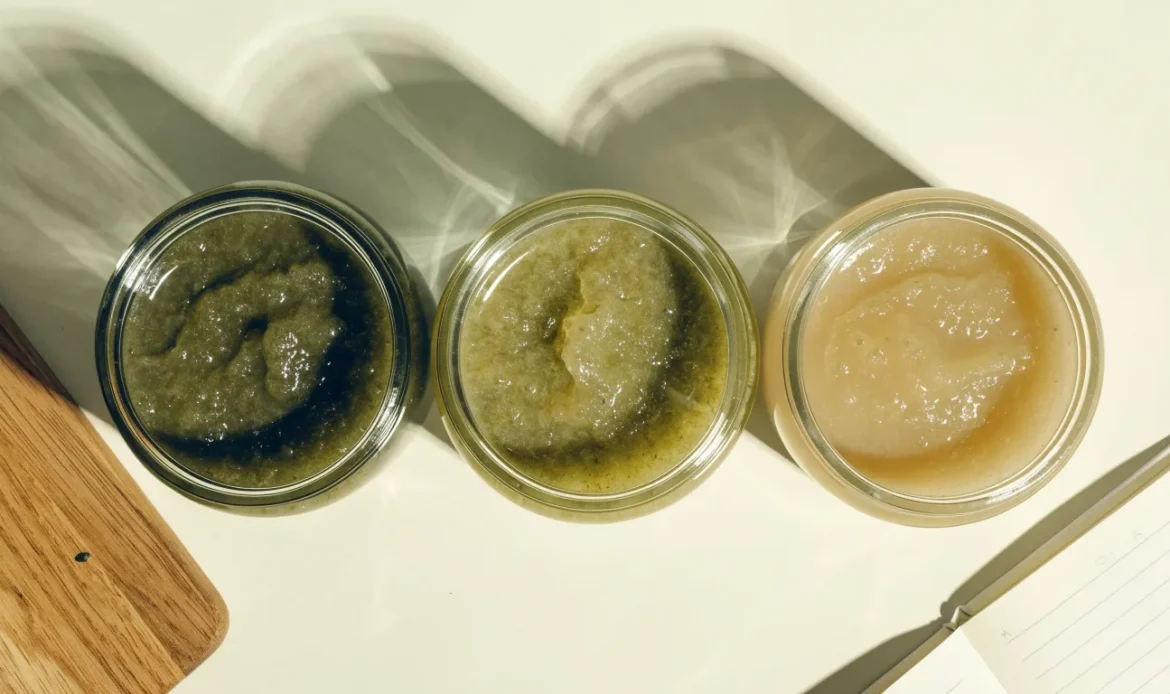
Short answer: Simsima sea moss is a market name used in parts of the Caribbean for sea moss sold as a raw or processed product. It is not a single scientific species name. If you are choosing a product called “simsima,” check the seller’s information about species, harvest method, processing, and testing before you buy.
This page explains what the name usually means in trade. It also shows the main product formats, how to compare them, a practical checklist you can use when buying, and what questions sellers should be able to answer.
What the name “Simsima” usually means
- “Simsima” is a local or trade name. It is used by some producers and sellers in Caribbean markets.
- Trade names can describe a local variety, a drying style, or a product from a specific area. They do not replace a botanical name or a lab report.
- Sellers use local names for marketing and recognition. That is normal. But a local name alone does not tell you the species, harvest date, or quality controls.
What you can ask for:
- The scientific or common species name listed on certificates.
- Where and how the sea moss was harvested (wild or farmed).
- How it was processed (sun-dried, shade-dried, oven-dried, or turned into gel).
- Any testing or certificates the seller can share.
What the name cannot prove:
- Health or nutrient content.
- Safety or absence of contaminants.
- Exact iodine levels or other lab values.
For those kinds of facts, ask for test results or a certificate of analysis (COA) from an accredited lab.
Common product formats and how they differ
Sellers call their products by many names. Below are the main formats you will find. Each format meets different needs.
Raw dried sea moss
- What it is: Whole or cut seaweed that has been dried for storage.
- Why people buy it: Long shelf life when dry. Can be rehydrated and used in recipes or made into gel.
- What to check: Color and smell (fresh ocean scent is normal; sour or rotten smells are not), visible sand or shell fragments, any signs of mold, and whether the seller provides a cleaning guide. Ask for harvest date and drying method.
- Prep note: Rinse, soak, and inspect. Soaking softens it so you can remove debris. Do not rely on a label for safety without testing info.
Sea moss gel (ready-to-use)
- What it is: Rehydrated sea moss blended with water into a gel texture. Often sold fresh and refrigerated.
- Why people buy it: Convenience. Ready for smoothies, recipes, or topical use.
- What to check: Storage instructions and a “made on” date. Gel is perishable. Ask whether preservatives were used. Ask about handling to avoid contamination.
Powdered sea moss
- What it is: Dried sea moss ground to a powder. May be sold as whole-seaweed powder or as an extract.
- Why people buy it: Easier to mix into drinks and dry blends. Longer shelf life than gel.
- What to check: Particle texture, any added fillers, and the manufacturing environment (shared equipment can be a source of cross-contact).
Capsules and pills
- What it is: Powdered sea moss encapsulated in pills.
- Why people buy it: Measured dose and shelf stability.
- What to check: Ingredient list, capsule material, and whether the product has a certificate of analysis. Dietary supplements are regulated differently by country; ask about testing and manufacturing practices.
Extracts or concentrates
- What it is: Extracted components of seaweed, sometimes offered as an oil or concentrate.
- Why people buy it: Specific use-cases where a concentrated form is desired.
- What to check: Extraction method and any solvents used. Ask for lab reports showing purity.
How to evaluate quality — a practical checklist
Use this checklist before you buy. If a seller cannot or will not answer these items, treat that as a risk sign.
Product info checklist:
- Product format: raw dried, gel, powder, capsule, or extract.
- Species name: scientific or clear common name on request.
- Harvest date or harvest season.
- Harvest method: wild-harvested or farmed.
- Harvest location: specific region, not just “Caribbean” (seller should be clear on origin).
- Processing method: sun-dried, shade-dried, oven-dried, or other.
- Storage and handling instructions.
- Visible contaminants: sand, shell fragments, foreign matter.
- Smell and color: fresh ocean odor vs off-odors; natural color vs artificial dyes.
- Any added ingredients or preservatives.
- Certificate of Analysis (COA): ask for tests for heavy metals, microbiological contaminants, and iodine where available.
- Third-party testing: lab name, date, and what was tested.
- Return policy and shelf-life guidance.
Safety and testing checklist:
- Does the seller provide an independent COA? If yes, check the lab name and date.
- Are iodine levels reported? Iodine in seaweed can vary widely and may be high for some forms of seaweed [2][3][5].
- Are heavy metals or other contaminants reported? Ask what elements were tested.
- For sea moss sold as supplements: ask whether it was manufactured under recognized quality systems and whether any additional ingredients are present [4].
Decision guide table: which format fits your goal
- Want lowest price for kitchen use: Raw dried. Check harvest date and cleaning guidance.
- Want convenience and speed: Gel. Check refrigeration and made-on date.
- Want long shelf life and easy dosing: Powder or capsules. Check for fillers and COA.
- Want concentrated component: Extract. Check extraction method and solvents.
- Buying large quantities for resale: Request samples and a COA. Confirm lead times and packaging.
What tests matter and why
Seaweed can pick up minerals and elements from seawater. That is why testing can be useful.
- Iodine can be high in some seaweeds. High iodine intake can affect thyroid function in some people. Ask for iodine testing if you plan regular consumption. Research shows variable iodine content across seaweed types and the need for care with intake [2][3][5].
- Heavy metals and contaminants. Seaweed can absorb metals from coastal waters. Testing can screen for cadmium, lead, mercury, and arsenic, among others. Ask for lab results if you plan to consume seaweed frequently [4].
- Microbiological safety. Gel and fresh products are perishable. Test results or documented sanitary handling reduce risk of spoilage or contamination.
- What a COA shows: A COA from an accredited lab lists analytes tested, methods used, and results with units and testing date. A COA is not a guarantee of safety forever; it applies to that batch only.
What testing cannot prove:
- A COA for one batch does not guarantee all batches are the same.
- A seller’s label alone does not prove contamination-free status.
- Absence of a COA does not always mean the product is unsafe, but it limits what you can verify.
Sources that explain these issues include work on iodine variability and reviews of seaweed as a source of iodine and related risks [2][5], and surveys about iodine across seaweed products [3]. For general product and supplement safety, see guidance on sea moss as dietary supplements [4]. For broad context about seaweed as food, see nutritional resources [1].
Buying samples, small orders, and wholesale
If you need larger amounts or want to resell:
- Request a sample from the seller before placing a bulk order.
- Ask for a COA for the batch you will receive.
- Ask about packaging, shelf life under recommended storage conditions, and lead times.
- Confirm how returns or quality disputes are handled.
If you are a wholesale buyer, typical questions to ask:
- Can you provide a sample and its COA?
- What are minimum order quantities and lead times?
- How is the product packaged for shipping?
- Do you offer private labeling or bulk packing?
- What is your quality assurance process?
If you need help with wholesale or to ask specific questions, contact the seller directly. For sales questions you can visit the wholesale page or contact us:
- Zen Wholesalers home: /
- Learn more: /learn/
- Shop options: /shop/
- Wholesale inquiries: /wholesale/
- Contact us: /contact/
Storage and basic handling notes
- Dry products: Store in a cool, dry place away from direct sunlight. Keep in a sealed container to avoid dampness. Dry sea moss can last a long time if kept dry.
- Gel: Keep refrigerated and follow the seller’s storage and use-by instructions. Gel is perishable.
- Powder and capsules: Store per label; keep away from heat and moisture.
These are general storage tips. Follow the seller’s instructions for the specific product.
Questions to ask a seller right now
- What is the species name of this product?
- Where and when was it harvested?
- How was it dried and processed?
- Do you have a COA for this batch? Which lab performed it and when?
- Are there added ingredients or preservatives?
If a seller cannot answer these clearly, you may want to delay purchase or seek another supplier.
Conclusion
“Simsima sea moss” is a trade name. It tells you that a product sits in a Caribbean market tradition. It does not replace clear product facts. When you shop, focus on the format that fits your needs and ask sellers for species, harvest details, processing notes, and lab reports. Use the checklist on this page to compare offers. If you want help with volume buying or questions for a supplier, visit our wholesale page or contact us.
Useful links:
- Home: /
- Learn more about sea moss: /learn/
- Shop formats and samples: /shop/
- Wholesale inquiries: /wholesale/
- Contact us for questions: /contact/
Continue reading
Frequently asked questions
Is “simsima sea moss” a single species?
No. “Simsima” is a market or local name. It does not replace a scientific name. Ask the seller which species the product contains.
How can I tell if dried sea moss is clean?
Rinse and soak to inspect for sand, shells, or foreign matter. Check smell and color. Ask the seller about cleaning and drying methods. A COA can show lab testing for contaminants.
Should I worry about iodine in sea moss?
Seaweed can contain variable iodine levels. Iodine can be high in some seaweed types. If you plan frequent consumption, ask for iodine testing or consult a health professional [2][3][5].
Does a COA guarantee a product is safe?
A COA confirms test results for a specific batch and date. It does not guarantee future batches or cover storage after sale. COAs are useful but not absolute guarantees.
Is sea moss gel safer than raw dried?
Not automatically. Gel is convenient but perishable. Safety depends on how it was made, handled, and stored. Raw dried can be long-lasting if kept dry. Both formats benefit from supplier transparency and testing.
Can I resell simsima sea moss I buy?
You can resell if you comply with local regulations for food or supplements. For wholesale or resale, ask the supplier for COAs, sample batches, and details on packaging and lead times.
References
- [1] Harvard T.H. Chan School of Public Health, “Seaweed.” https://nutritionsource.hsph.harvard.edu/seaweed/
- [2] Smyth PPA. “Iodine, Seaweed, and the Thyroid.” European Thyroid Journal, 2021. https://pmc.ncbi.nlm.nih.gov/articles/PMC8077470/
- [3] Food Standards Australia New Zealand, “Survey of iodine levels in seaweed and seaweed containing products,” updated 2025. https://www.foodstandards.gov.au/science-data/monitoring-safety/surveyofiodinelevels
- [4] Operation Supplement Safety, “Sea Moss in Dietary Supplements.” https://www.opss.org/article/sea-moss-dietary-supplements
- [5] Blikra MJ et al. “Consequences of acute and long-term excessive iodine intake: A literature review focusing on seaweed as a potential dietary iodine source.” 2024. https://doi.org/10.1111/1541-4337.70037