
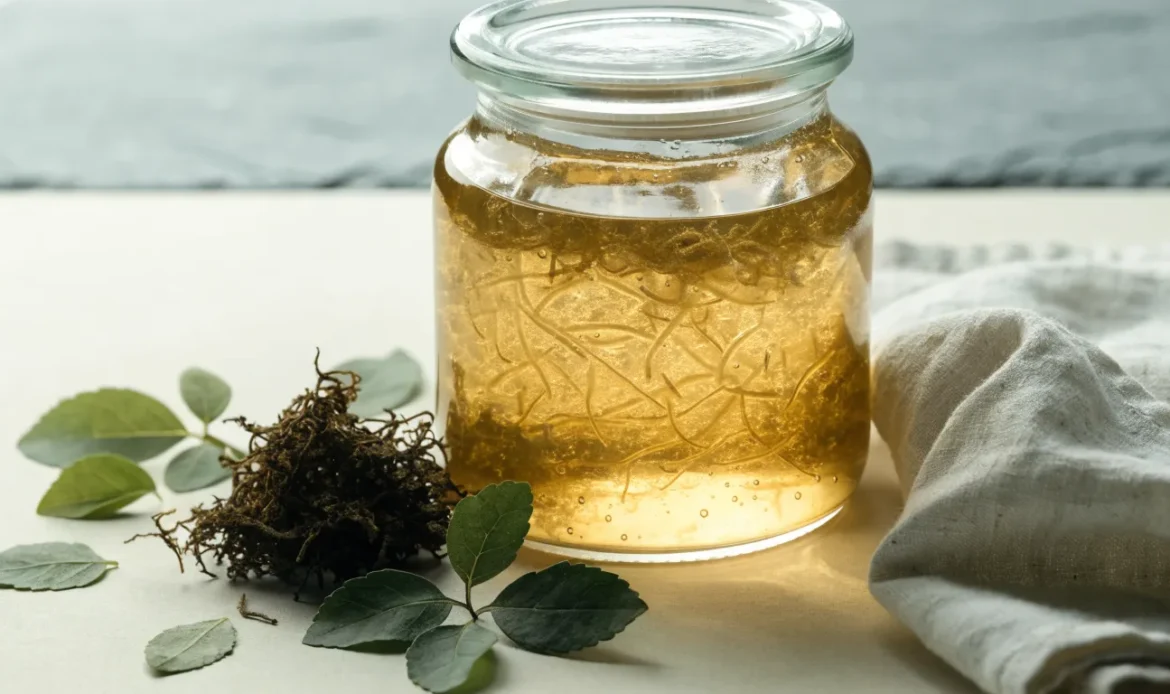
Short answer: Sea moss in Spanish is most often called “musgo de mar” or “musgo marino.” Other common names are “musgo irlandés” for Irish moss and simply the scientific name like “Chondrus crispus” or “Gracilaria.” If you see “alga” plus “musgo” or “alga roja,” it often refers to similar seaweed types.
Why this short answer first: many people only need the word quickly. The rest of this page helps you read labels, compare formats, and ask the right questions when buying sea moss in Spanish.
Common Spanish names and what they mean
- Musgo de mar / Musgo marino
- Literal: sea moss. Used as a generic term.
- Where you see it: product labels, recipes, market stalls.
- Musgo irlandés
- Literal: Irish moss. Often used for Chondrus crispus or similar red algae.
- Note: “Irish” is a common name, not proof of origin.
- Alga musgo or alga musgosa
- Used when sellers want to stress that it is an algae.
- Alga roja
- Means “red algae.” Many sea moss types come from red algae groups.
- Scientific names (Latin)
- Chondrus crispus, Gracilaria sp., and other Latin names may appear.
- Scientific names are the clearest way to know species. Labels that list them are often more useful.
Regional and product names vary. Sellers in different Spanish-speaking countries may use local terms. Always check the label and, when unsure, ask for the scientific name.
How to read sea moss product labels in Spanish
Labels can use short phrases you should know.
- “Seco” or “Deshidratado” = dried.
- “Fresco” = fresh.
- “Polvo” = powder.
- “Gel” or “Gelificado” = gel form.
- “Cápsulas” = capsules.
- “Extracto” = extract.
- “Sin aditivos” = no additives.
- “Sin conservantes” = no preservatives.
- “Origen” = origin or source (but this may be vague).
- “Nombre científico” = scientific name.
- “Peso neto” = net weight.
- “Instrucciones” = instructions for use or storage.
When a label lists a scientific name (for example, “Chondrus crispus” or “Gracilaria”), that helps you match the product to trusted descriptions. If a label only says “musgo de mar” with no other detail, plan to ask the seller for more information.
Sea moss in Spanish beneficios — what sellers say and what we can check
In Spanish, product pages and labels often include the word “beneficios.” That word means “benefits.” Marketing will list beneficios as things people expect from sea moss. Common claims include help with skin, digestion, and general nutrition.
What you can check:
- Ingredient list. This shows if the product is just sea moss or if other items were added.
- Formato (format). Dried, powdered, gel, or capsule changes how you use it.
- Scientific name. This tells you the species.
- Storage instructions. These tell you how long a product may last after opening.
- Test results or lab reports. Ask the seller if they have them.
What labels and marketing cannot prove:
- A label cannot prove a product will give a specific health result for you.
- Labels do not show actual mineral amounts unless a lab test is provided.
- Labels alone cannot confirm levels of iodine, heavy metals, or contaminants. These can vary by species and where the seaweed grew.
What experts say about seaweed nutrients and iodine:
- Seaweed can contain minerals and other nutrients, but amounts vary by species and location. (See Harvard T.H. Chan School of Public Health.) [1]
- Iodine levels in seaweed are highly variable. Consuming large or frequent amounts of high-iodine seaweed can cause too much iodine intake in some people. [2][5]
- Food safety bodies conduct surveys of iodine in seaweed products because of this variability. [3]
If a label claims specific nutrient levels, ask for a certificate of analysis (COA) or other third-party lab report. A COA shows measured values for nutrients and contaminants for a specific batch. Many small sellers do not provide COAs. That is not proof of harm. It simply means you have less data to judge.
Formats (formatos) and how to choose — a comparison table
Below is a simple table in Spanish and English to compare common formats. Use it to decide which form fits your needs.
| Formato (Spanish) | English | Typical use | Label words to look for (Spanish) | Quick pros and cons |
|---|---|---|---|---|
| Seco / Deshidratado | Dried | Rehydrate, long storage | “seco”, “deshidratado”, “peso neto” | + Long shelf life. – Need prep. |
| Gel | Gel | Smoothies, topical use | “gel”, “gelificado” | + Ready to use. – Shorter shelf life, may have added water/ingredients. |
| Polvo | Powder | Mix into drinks, baking | “polvo”, “molido” | + Easy to measure. – Could be concentrated; check for fillers. |
| Cápsulas | Capsules | Supplement form | “cápsulas”, “suplemento” | + Convenient. – Check capsule fillers and dose instructions. |
| Extracto | Extract | Small-dose use | “extracto”, “concentrado” | + Potent. – Often lacks detail on concentration. |
| Fresco | Fresh | Culinary uses | “fresco” | + Natural texture. – Hard to ship/store. |
| Granel / Compra al por mayor | Bulk / Wholesale | Businesses or large users | “granel”, “al por mayor” | + Cost per kilo may be lower. – Requires storage and quality checks. |
This table is a guide. Labels vary. Always read the label and ask questions if anything is missing.
A practical decision checklist (in Spanish/English) before you buy
Use this checklist when looking at a product page or a label in Spanish. Check “Yes” or ask the seller.
- Name and species: Does the product list a scientific name? (Yes / No)
- Formato: Is the format clear (seco, gel, polvo, cápsulas)? (Yes / No)
- Ingredient list: Is it only sea moss or are other ingredients listed? (List them)
- Origen: Is the origin of harvest listed? (Yes / No / Vague)
- Peso neto and serving sizes: Are these shown? (Yes / No)
- Storage instructions: Are they clear? (Yes / No)
- Safety or allergy info: Are warnings present? (Yes / No)
- Test results / COA: Can the seller provide lab reports for iodine, heavy metals, or microbes? (Yes / No / Ask)
- Additives: Are preservatives or sweeteners present? (Yes / No)
- Intended use: Is there a recommended use or dose? (Yes / No / Vague)
If you answer “No,” consider asking the seller or choosing a product with clearer information.
Safety notes, iodine, and what science says
Short summary: seaweed can contain iodine. The amount can change a lot by species and where it grew. Too much iodine can be a health concern for some people. Use caution and check product data if you need to limit iodine.
What the references say:
- Seaweed is a food group that can provide minerals and other compounds. But nutrient amounts vary widely. [1]
- Iodine levels in seaweed are not uniform. Studies and reviews call attention to variable iodine and the need for care. [2][5]
- Food safety agencies actively monitor iodine in seaweed products to understand levels and risk. [3]
- If sea moss is sold as a dietary supplement, regulations and testing vary by country. Organizations that review supplements recommend caution with untested products. [4]
Practical steps you can take:
- Ask for a COA for the batch if iodine or heavy metals are a concern.
- Limit how much you consume if you do not have test data, or choose smaller servings.
- Talk to a healthcare professional if you have thyroid issues or take iodine-sensitive medicine. (Do not replace medical advice with product info.)
How to ask sellers questions in Spanish
Here are useful Spanish phrases for buyers. Use them to request information.
- ¿Cuál es el nombre científico del producto? (What is the scientific name?)
- ¿Es seco, en gel, en polvo o en cápsulas? (Is it dried, gel, powder, or capsules?)
- ¿Tiene análisis de laboratorio o certificado de análisis (COA) para este lote? (Do you have lab analysis or COA for this batch?)
- ¿De dónde proviene este musgo de mar? ¿País o región de recolección? (Where does this sea moss come from? What country or region?)
- ¿Contiene aditivos o conservantes? (Does it contain additives or preservatives?)
- ¿Cuáles son las instrucciones de almacenamiento? (What are the storage instructions?)
- ¿Cuál es el tamaño de la porción y la recomendación de uso? (What is the serving size and recommended use?)
If you get short answers, ask for written details. A reliable seller should answer clearly.
Buying in bulk / wholesale (al por mayor)
If you are buying sea moss in Spanish-speaking markets or from suppliers with Spanish labels, you may see terms like “granel”, “por mayor”, or “distribuidor.” Bulk buying can lower cost per unit. But bulk buyers need to do more checks:
- Confirm species and batch testing.
- Check packing and shelf-life instructions.
- Plan for storage space and conditions.
- Ask for sample batches before a large order.
If you need business help, contact a supplier and ask for a sample and documentation. Use clear Spanish phrases from the previous section to request details.
Where to learn more and next steps
If you want to learn more about sea moss and formats, visit our learning pages or shop pages:
- Learn more general info: Learn
- Learn about product formats and preparation: Learn formats
- See available products: Shop
- If you need bulk options: Wholesale
- Questions or custom orders: Contact
- Back to home: Home
These links can help you find product lists, format guides, and contact options.
Conclusion
If you need a quick translation, “musgo de mar” or “musgo marino” will work. For buying or using sea moss in Spanish, check the format, scientific name, ingredient list, and storage rules. Ask sellers for lab tests if you are concerned about iodine or contaminants. Labels tell part of the story. They cannot prove specific nutrient levels or safety without supporting lab data. Use the checklist and phrases here to get clearer information.
If you want to explore product options or learn about formats and preparation, visit our Learn (/learn/) pages, browse the Shop (/shop/), or contact our team via Wholesale (/wholesale/) or Contact (/contact/).
Frequently asked questions
How do you say “sea moss” in Spanish?
The most common words are “musgo de mar” or “musgo marino.” “Musgo irlandés” may appear for Irish moss. Scientific names like “Chondrus crispus” or “Gracilaria” are also used.
What does “sea moss in spanish beneficios” mean?
That phrase asks about the benefits of sea moss in Spanish. Sellers often list “beneficios” on labels or product pages. These descriptions should be treated as marketing unless supported by lab data or scientific studies.
Is “musgo irlandés” the same as “musgo de mar”?
They are related but not always identical. “Musgo irlandés” commonly refers to Chondrus crispus or similar red algae. “Musgo de mar” is more generic. Check the scientific name on the label to be sure.
How can I check iodine levels in sea moss sold in Spanish-speaking markets?
Ask the seller for a certificate of analysis (COA) or lab test that lists iodine. If none is available, consider smaller amounts or forms with recommended serving sizes. Scientific reviews note that iodine content in seaweed varies widely. [2][5]
What Spanish label words mean the product has no additives?
Look for “sin aditivos” and “sin conservantes.” Also check the ingredients list for added sugars, oils, or preservatives.
Can I make sea moss gel at home from dried sea moss?
Many people rehydrate dried sea moss and blend it into a gel. If you plan to do this, follow cleaning and food safety steps. When buying dried sea moss, check the label for “seco” or “deshidratado” and ask the seller about recommended preparation steps.
References
- [1] Harvard T.H. Chan School of Public Health, “Seaweed.” https://nutritionsource.hsph.harvard.edu/seaweed/
- [2] Smyth PPA. “Iodine, Seaweed, and the Thyroid.” European Thyroid Journal, 2021. https://pmc.ncbi.nlm.nih.gov/articles/PMC8077470/
- [3] Food Standards Australia New Zealand, “Survey of iodine levels in seaweed and seaweed containing products,” updated 2025. https://www.foodstandards.gov.au/science-data/monitoring-safety/surveyofiodinelevels
- [4] Operation Supplement Safety, “Sea Moss in Dietary Supplements.” https://www.opss.org/article/sea-moss-dietary-supplements
- [5] Blikra MJ et al. “Consequences of acute and long-term excessive iodine intake: A literature review focusing on seaweed as a potential dietary iodine source.” 2024. https://doi.org/10.1111/1541-4337.70037