
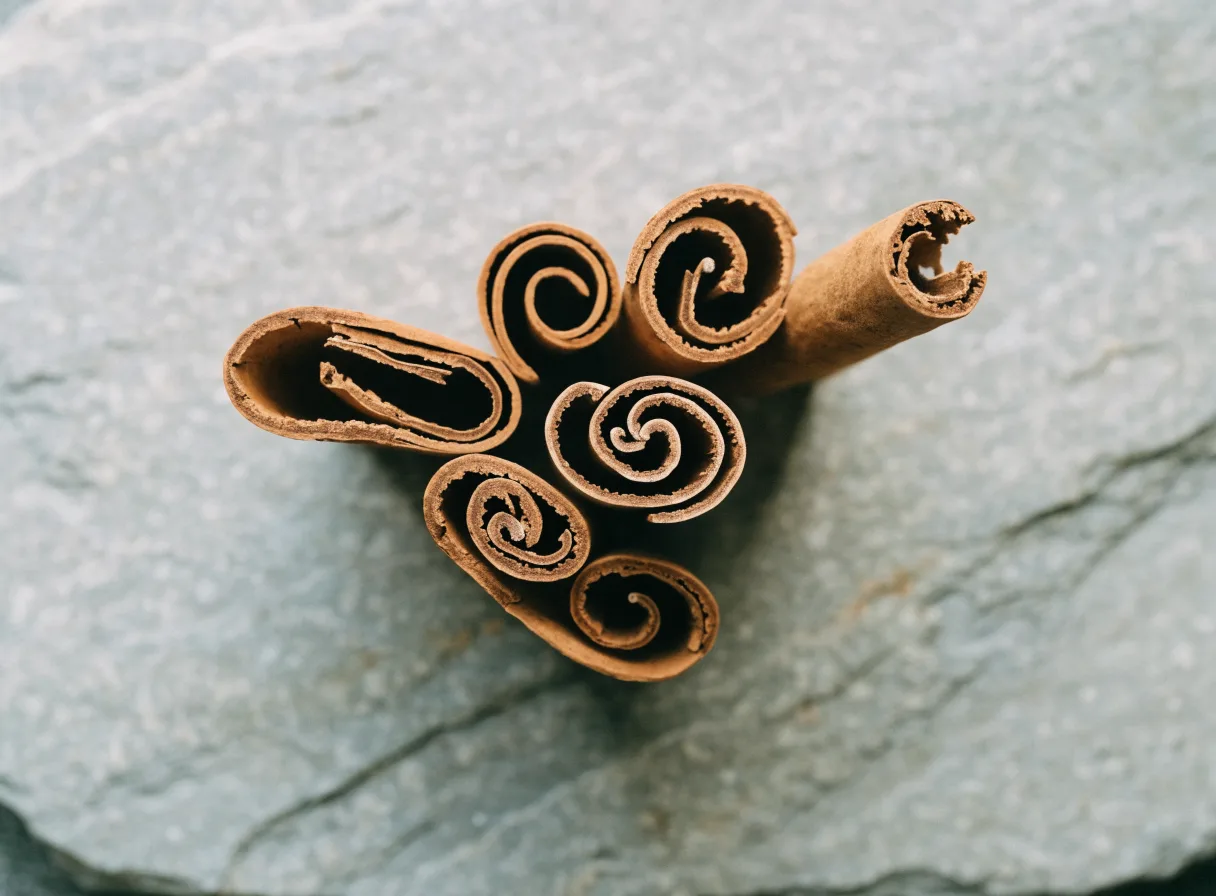
Ceylon cinnamon is the dried inner bark of Cinnamomum verum — the tree the word originally meant. It rolls into a brittle quill of many fine papery layers, and it tastes floral and mild rather than hot.
How to tell it apart
| Ceylon | Many thin layers rolled together. Snaps and crumbles between your fingers. Tan, matte, light in the hand. |
|---|---|
| Cassia | One thick curl of hard bark with a hollow centre. Will not crumble. Darker, redder, heavier. |
Almost all cinnamon sold worldwide is cassia. The two are not interchangeable: cassia carries roughly 1% coumarin against about 0.004% in Ceylon, and mislabelling cassia as Ceylon is a documented problem in the spice trade. If the seller cannot name the species, assume cassia.
Specimen
| Botanical name | Cinnamomum verum |
|---|---|
| Family | Lauraceae |
| Part used | Dried inner bark |
| Also called | True cinnamon, kannèl |
| Origin | Grown and dried in Saint Lucia |
| Form | Whole and dried, not ground |
Using it
- Grate into cocoa tea alongside a bay leaf — the Saint Lucian way.
- A quill in stewed fruit, porridge or rice pudding.
- Steeped whole for tea; it gives up flavour more readily than cassia.
Keeping it
Whole quills in an airtight jar away from light. Whole keeps its oils far longer than ground.
Read more
Need a larger volume? Cases and bulk quantities are quoted the same way as a single pack — say how much you need in the form below and we will price it, and mention it in the notes if you want a recurring supply.