
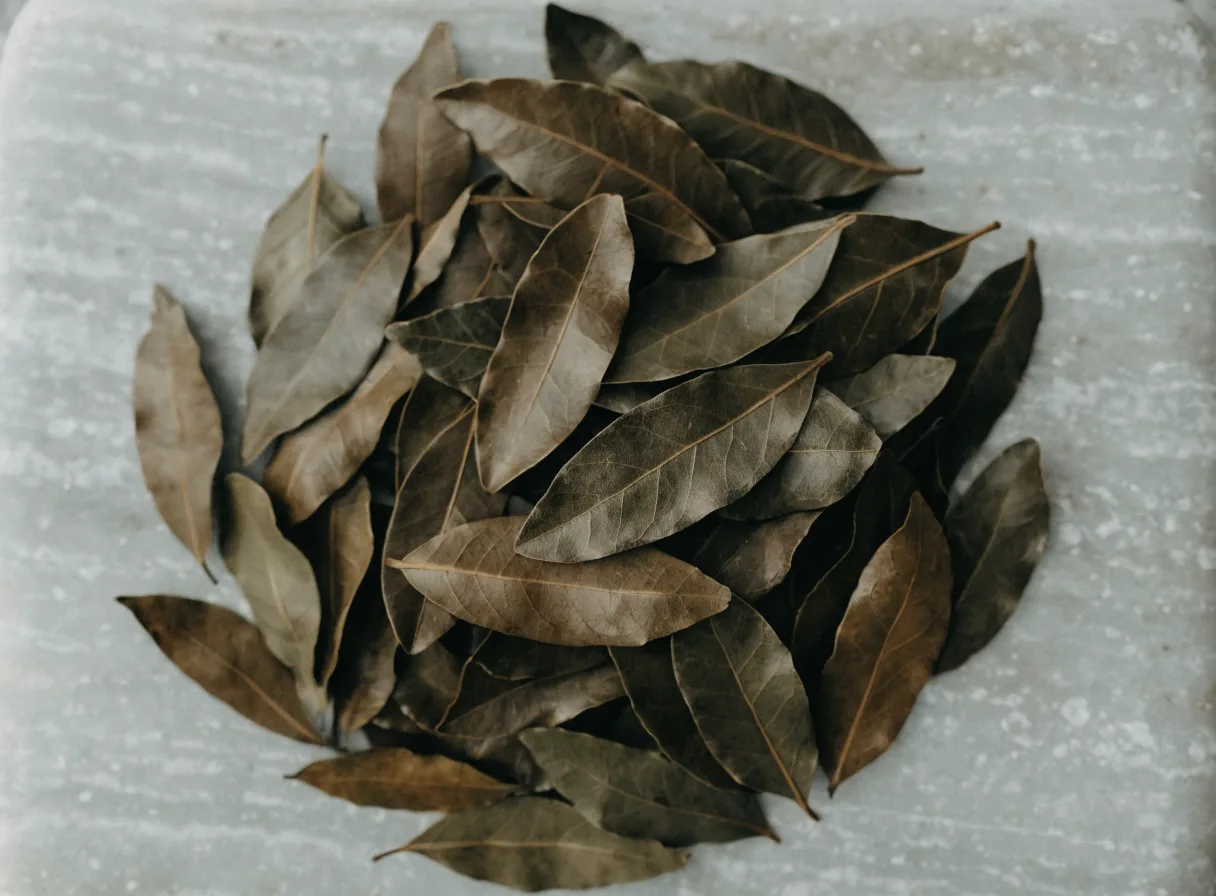
When a Caribbean recipe says bay leaf, this is the leaf it means: Pimenta racemosa, a myrtle and a close cousin of allspice. It is not the laurel sold as bay leaf in most supermarkets, and it does not taste like it.
How to tell it apart
| West Indian bay | Myrtle family. Essential oil runs 60–83% eugenol, so it reads as clove and allspice. Leaves are elliptical and leathery with a prominent midrib. |
|---|---|
| Mediterranean bay | Laurus nobilis, laurel family. Cineole-dominant, so it reads as eucalyptus and pine. A different plant doing a different job. |
This is the substitution that quietly changes a dish. Swap one for the other one-for-one and the result is not a weaker version of the same thing — it is a different flavour. The tree is also the source of bay rum, which is where the clove note comes from.
Specimen
| Botanical name | Pimenta racemosa |
|---|---|
| Family | Myrtaceae |
| Part used | Dried leaf |
| Also called | Bay rum tree, bwa denn |
| Origin | Grown and dried in Saint Lucia |
| Form | Whole and dried, not ground |
Using it
- Souse, pepperpot, stews and marinades.
- One leaf in the pot when you make cocoa tea, with a quill of cinnamon.
- Steeped on its own as a bush tea.
Keeping it
Whole leaves in an airtight container away from light. Crumble only when you use them.
Read more
Need a larger volume? Cases and bulk quantities are quoted the same way as a single pack — say how much you need in the form below and we will price it, and mention it in the notes if you want a recurring supply.